Playground turf and safety surfacing
Soft landings without wood chips scattering across the yard in the first monsoon wind.
Soft landings without wood chips scattering across the yard in the first monsoon wind.
Wood chips and rubber mulch do not survive Scottsdale. Monsoon wind moves them, summer sun breaks them down, and they end up in the pool, the gravel and the house. Turf with a shock pad underneath solves it permanently.
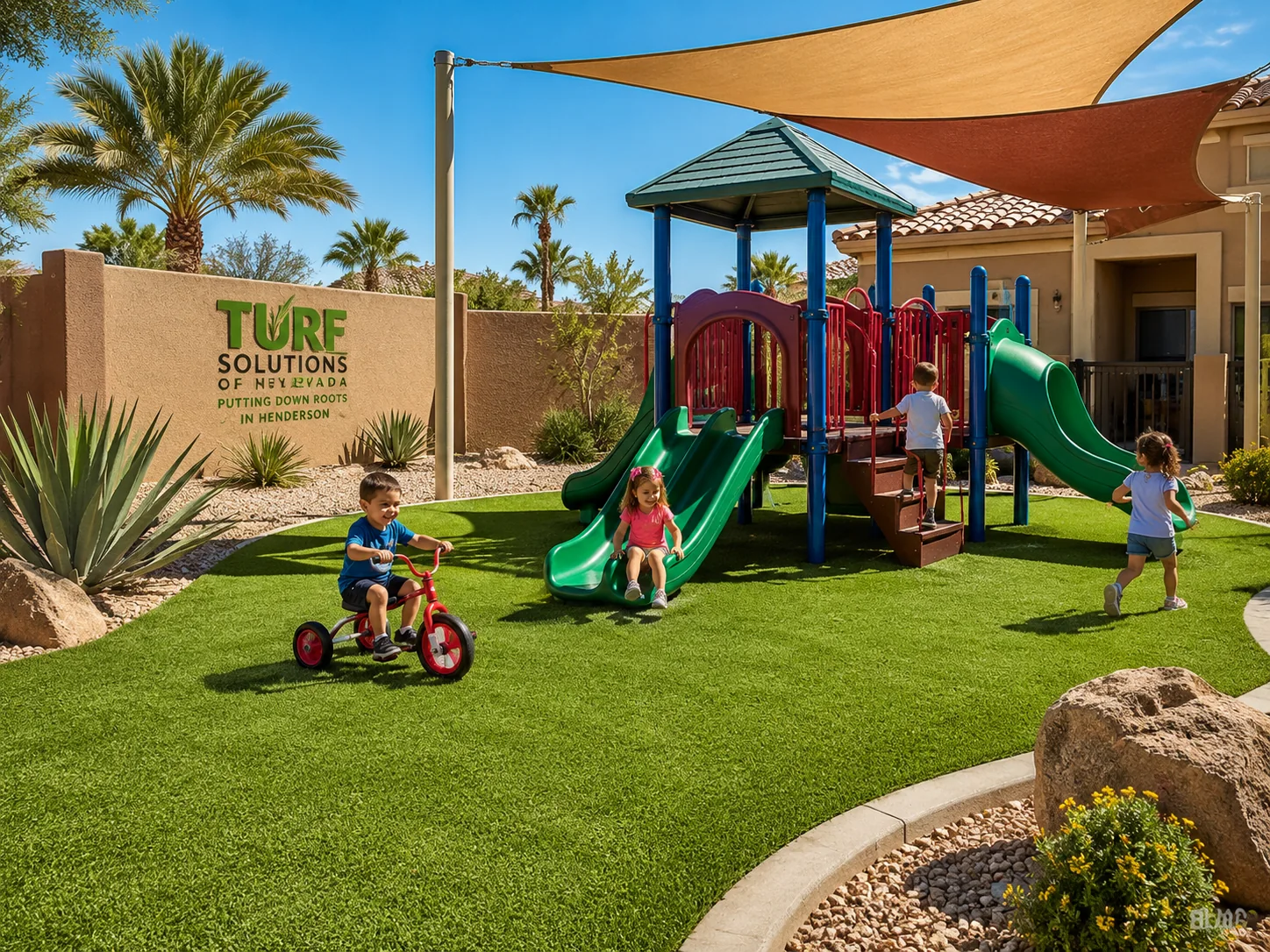
Playground surfacing is rated by critical fall height, and the rating comes from the padding beneath the turf rather than the turf itself. Thicker pad, higher rated fall height. Residential play sets typically need modest padding; commercial equipment is governed by the tallest accessible platform.
For daycares, schools and community play areas we build to ASTM F1292 with IPEMA-certified systems and provide documentation for inspection.
This deserves more attention here than anywhere else. A fully exposed play area in July will be too hot for comfortable use in the middle of the day, and that is true of any surface — rubber, concrete or turf.
What helps: cooling-technology turf, which we specify as standard for play areas; shade sails or structures, which matter more than the surface choice; and scheduling play for mornings and evenings, which most Scottsdale families already do. A shaded, cooled play area is comfortable through the season.
Turf rinses clean. For daycares and schools we specify antimicrobial infill. No wood chips means nothing harbouring insects and nothing for a small child to put in their mouth.
Padded surfacing runs higher than standard lawn turf. A 500 square foot residential play area typically falls between $6,500 and $11,500 depending on pad thickness. Commercial installations are quoted against fall height requirements. Pricing detail.
Most estimates are scheduled within 48 hours.
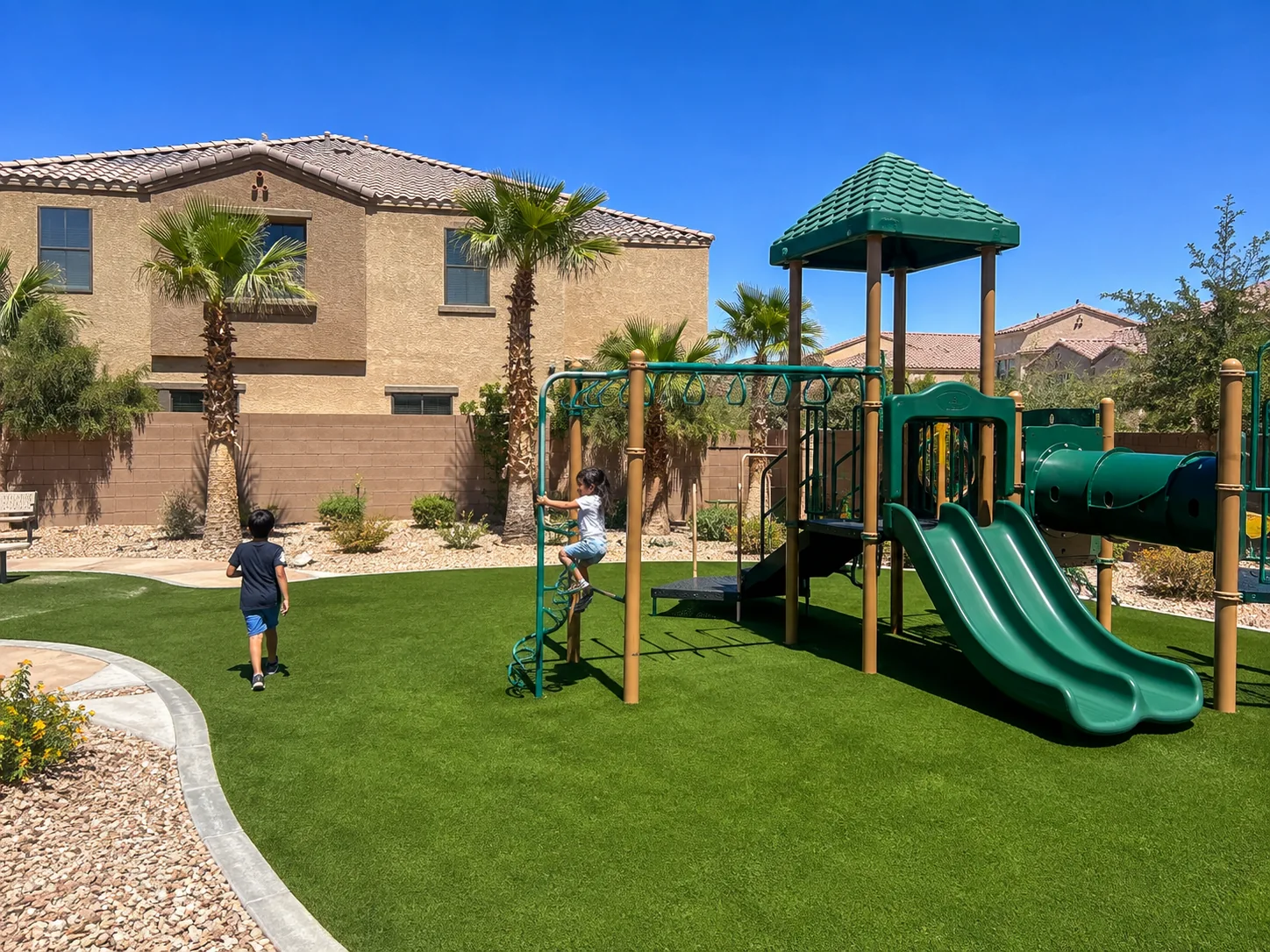
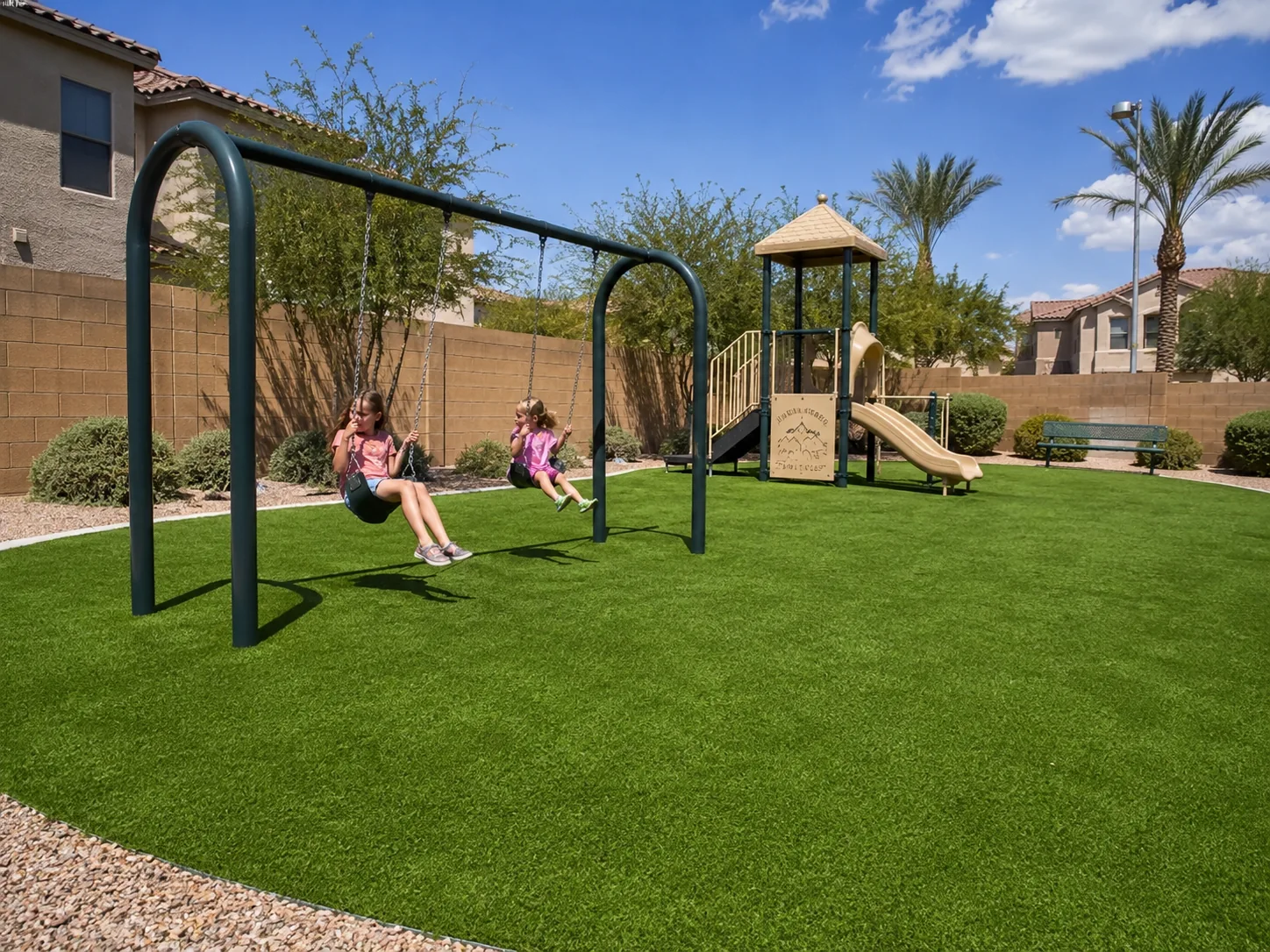
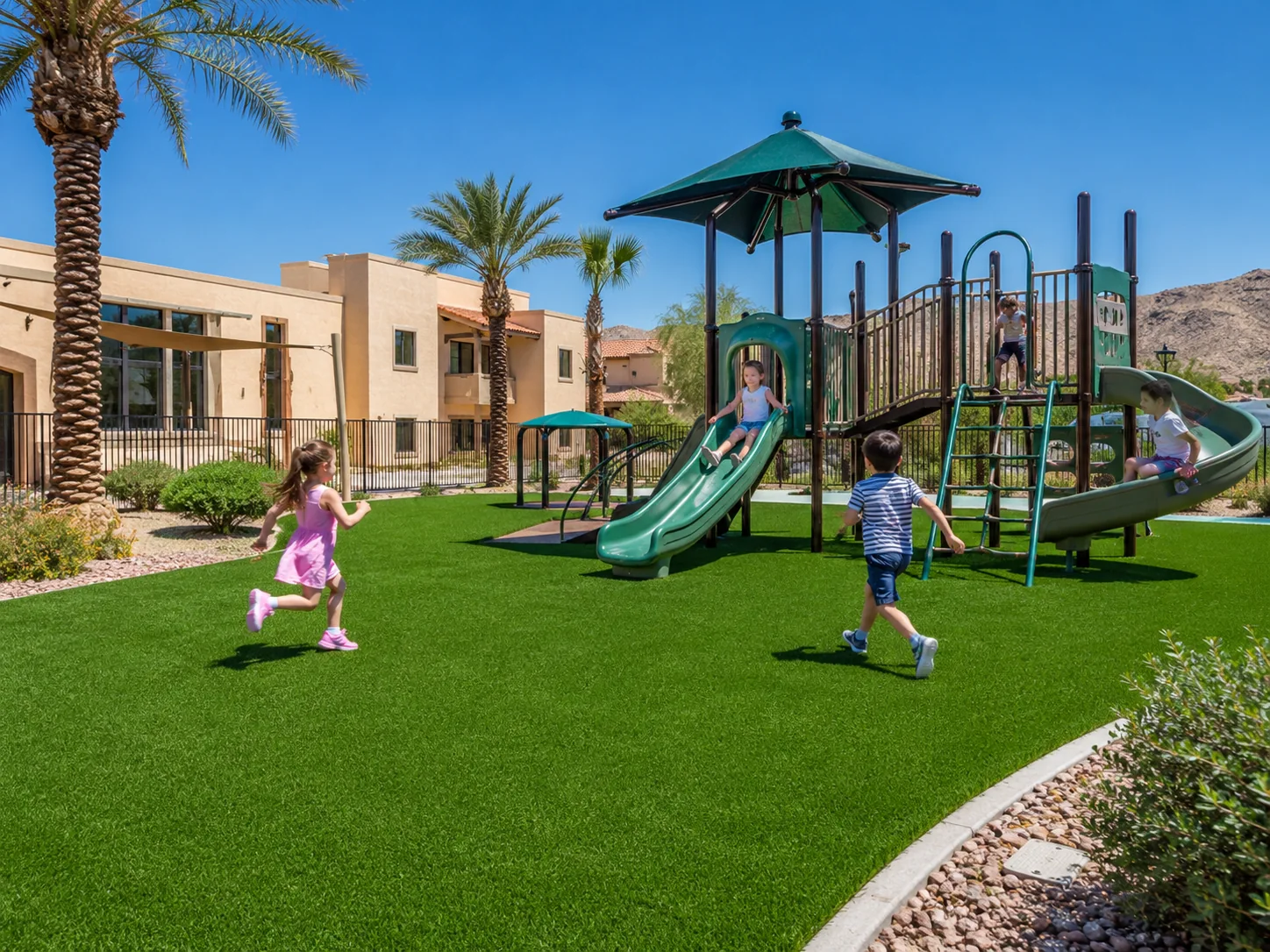
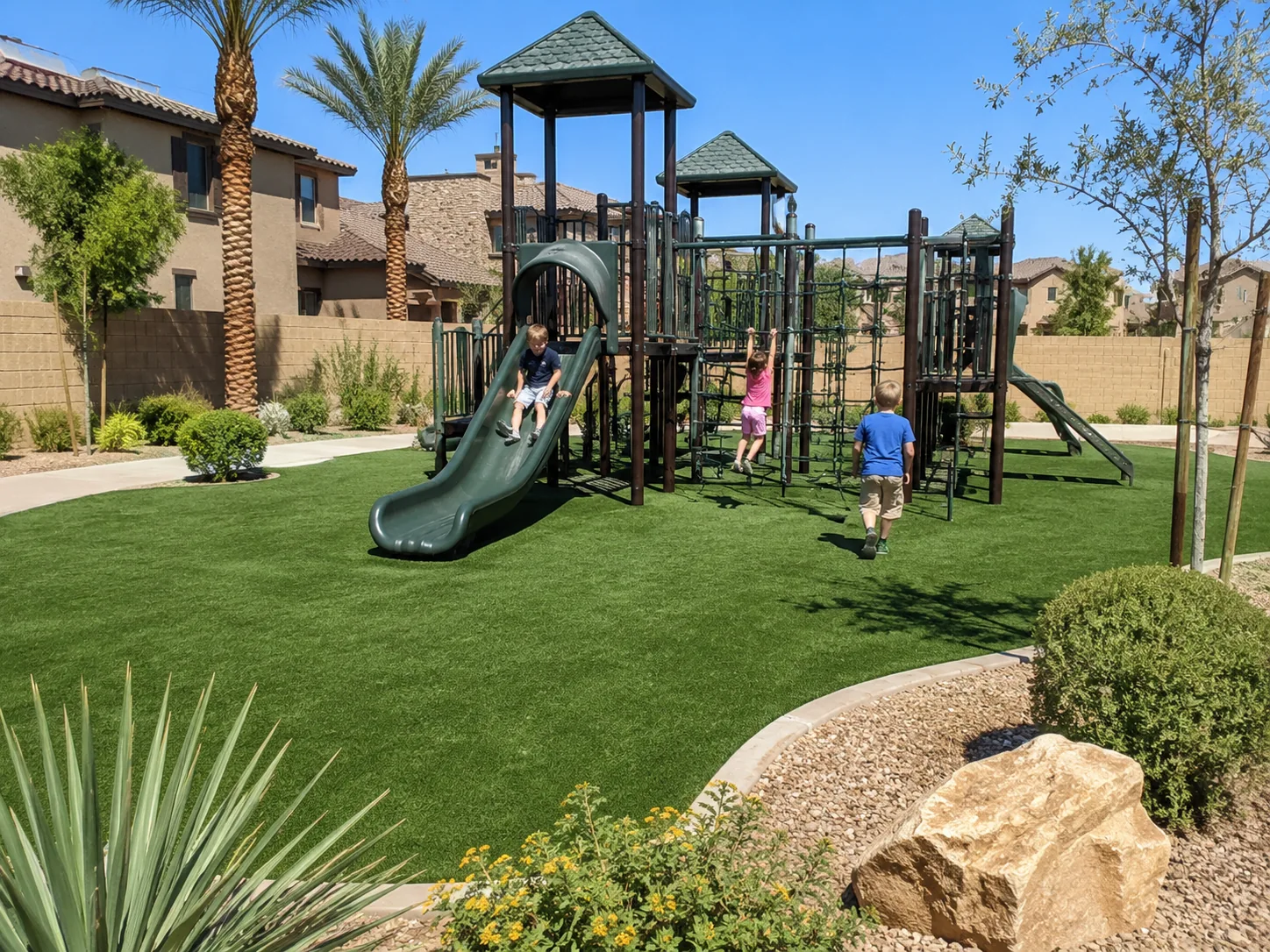
Images are representative of the work we do.
Tell us the space and we’ll give you a firm, written price. No pressure, no obligation.