Turf infill options compared
The granular material between the blades. In this heat, the choice matters more than most people expect.
The granular material between the blades. In this heat, the choice matters more than most people expect.
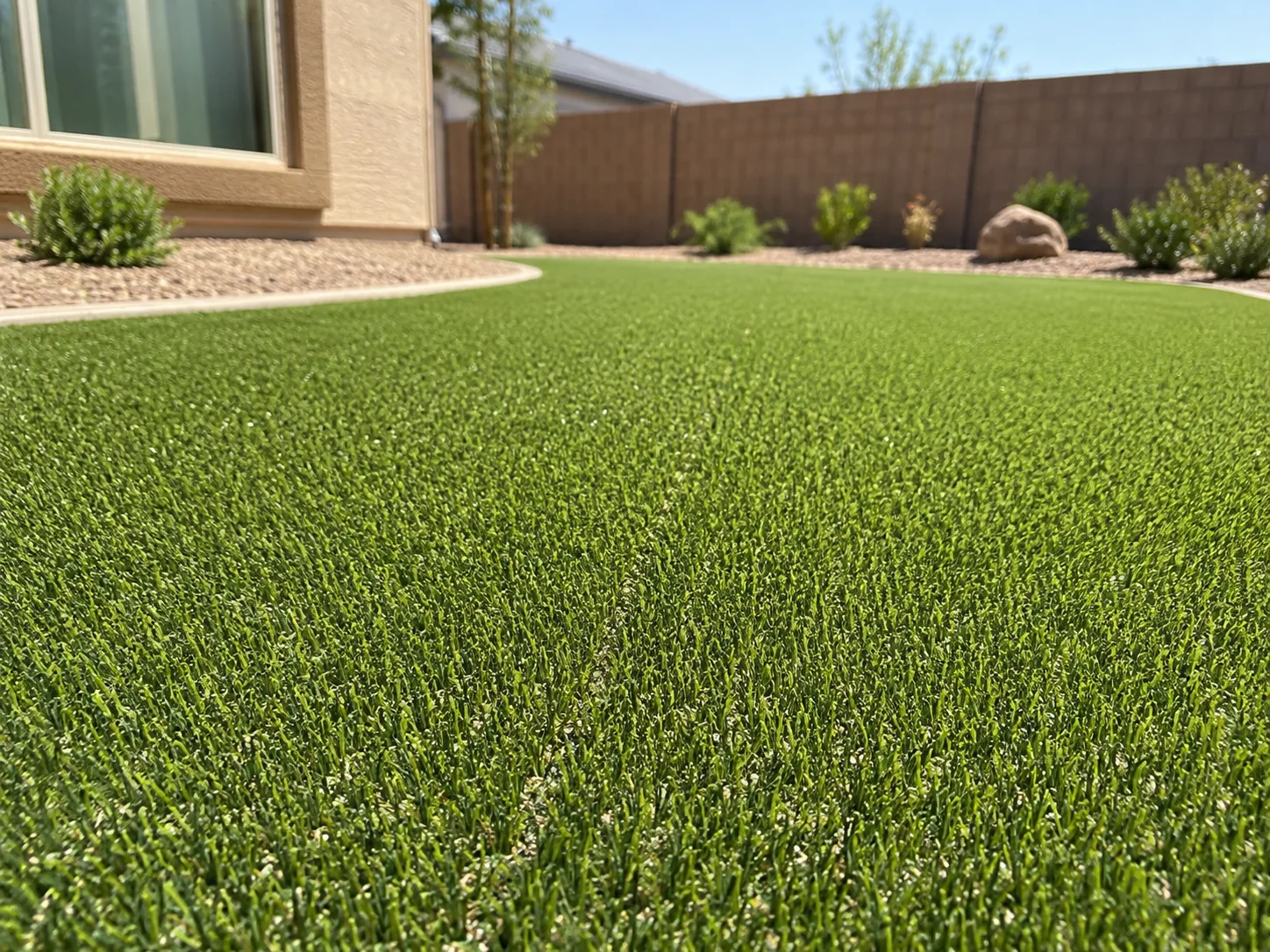
Infill weighs turf down, supports blades so they stand upright, and protects fibres from crushing. Skimp on it and turf looks flat and wears out years early.
Rounded washed quartz sand. The default and cheapest.
Good for: standard lawns and desert conversions with no pets.
Weakness: holds ammonia from pet urine. In 110-degree heat that becomes obvious fast, so it is the wrong choice for any dog area regardless of the saving.
Silica with an acrylic coating containing an antimicrobial agent.
Good for: pet areas, playgrounds, anywhere hygiene or odour matters.
Weakness: costs more than plain silica. Retrofitting later means removing what is already down, so decide correctly the first time.
A volcanic mineral with high cation exchange capacity — it captures and holds ammonia rather than letting it off-gas.
Good for: heavy pet use, multi-dog households, boarding facilities.
Weakness: lighter than sand and can migrate in a monsoon downpour. Often blended with silica to get both properties.
Recycled tyre granules, standard on athletic fields for shock absorption.
The problem in Scottsdale: it retains substantially more heat than light-coloured infill. In a climate where surface temperature is already the main objection to turf, dark rubber makes the one real weakness measurably worse. We do not use it in residential installations here.
Cork and coconut fibre. Cooler underfoot, which is genuinely appealing here, but they decompose and need replenishing, and they rely on retained moisture for the cooling effect — which in a desert with single-digit humidity means the benefit is short-lived between waterings.
Worth stating plainly: lighter infill reflects more and holds less heat. In this climate that is a real consideration, not a marginal one, and it is part of why we specify light sand or zeolite as standard.
One to two pounds per square foot depending on pile height and use. Under-infilling is a common way to shave a quote. If a bid seems low, ask what infill weight is specified.
Infill migrates and settles. Topping up every few years restores blade support and extends fibre life. Inexpensive and routinely overlooked.
Most estimates are scheduled within 48 hours.
Tell us the space and we’ll give you a firm, written price. No pressure, no obligation.