Turf vs grass vs desert landscaping
Three options, not two — and the right answer is often a combination.
Three options, not two — and the right answer is often a combination.
In most of the country this is a two-way comparison. Here it is a three-way one, and pretending otherwise does you no favours.
For: at its best, nothing looks or feels better. Cool underfoot. Genuinely pleasant for children and dogs in summer.
Against: daily summer irrigation in a state operating under Colorado River shortage conditions. Brown dormancy through winter unless you overseed, which costs more water again. And rising water rates with no sign of reversing.
For: cheapest option. Lowest water use. Fully rebate-eligible. Regionally appropriate and increasingly the default.
Against: no soft surface anywhere. Dark rock absorbs and radiates significant heat, often more than turf. Nowhere for children or dogs to play. Can read as bleak if done without care.
For: zero water. Green every day of the year. Soft, usable surface. Rebate-eligible within a compliant conversion. No dormancy, no mowing, no dust from bare dirt.
Against: hot in full sun without shade or cooling technology. Higher up-front cost than rock. Finite life of fifteen to twenty years. Petroleum product.
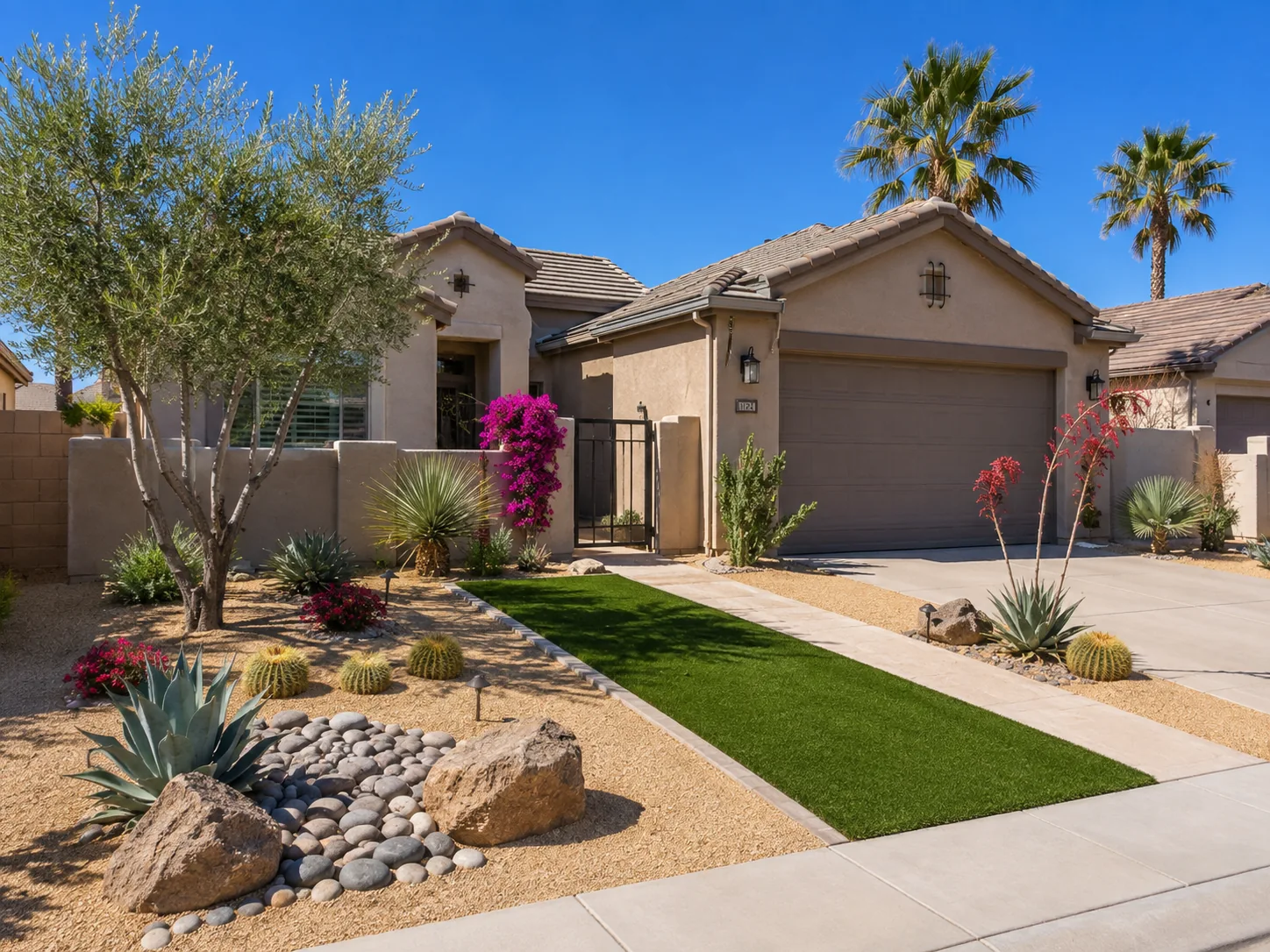
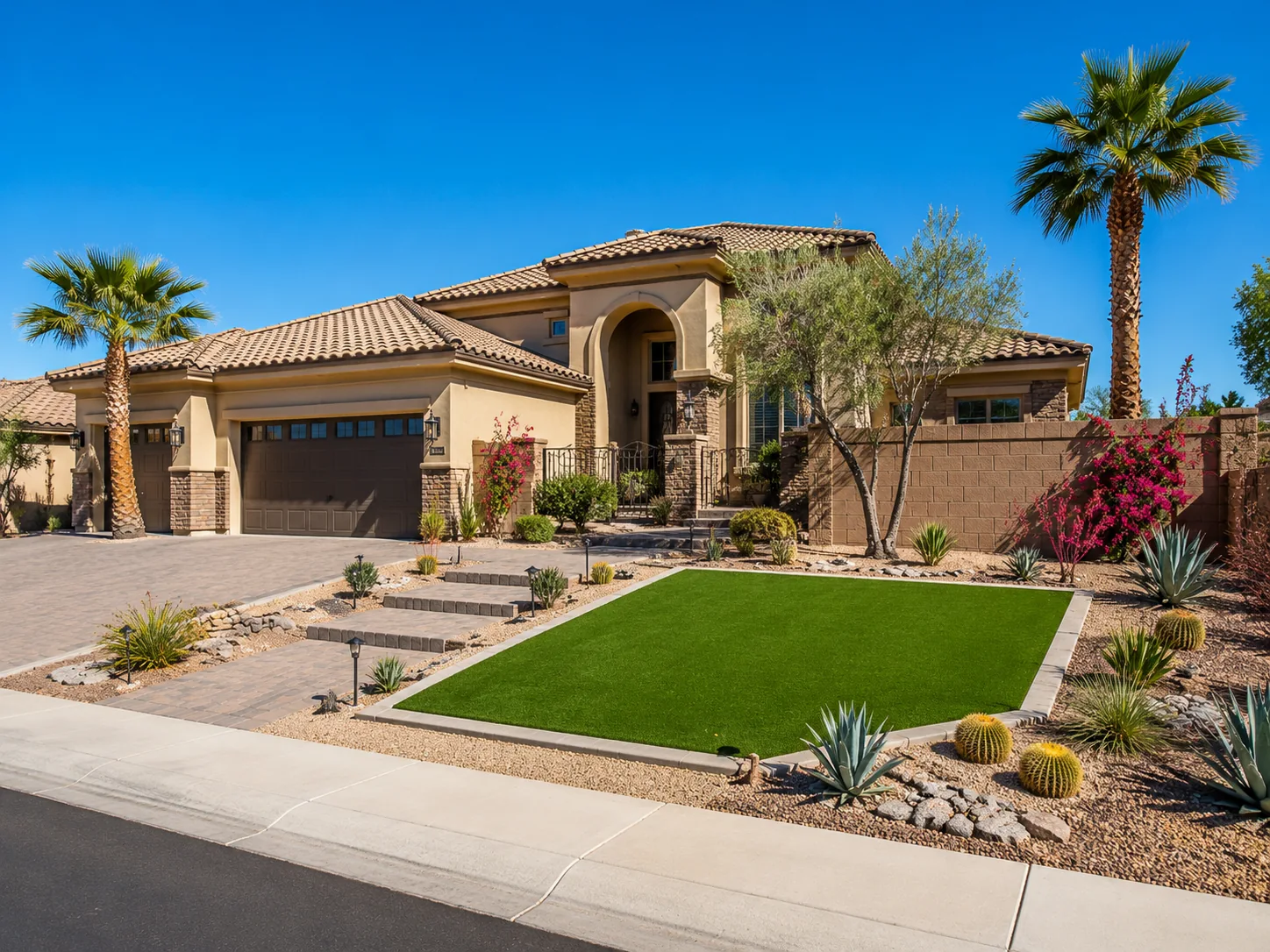
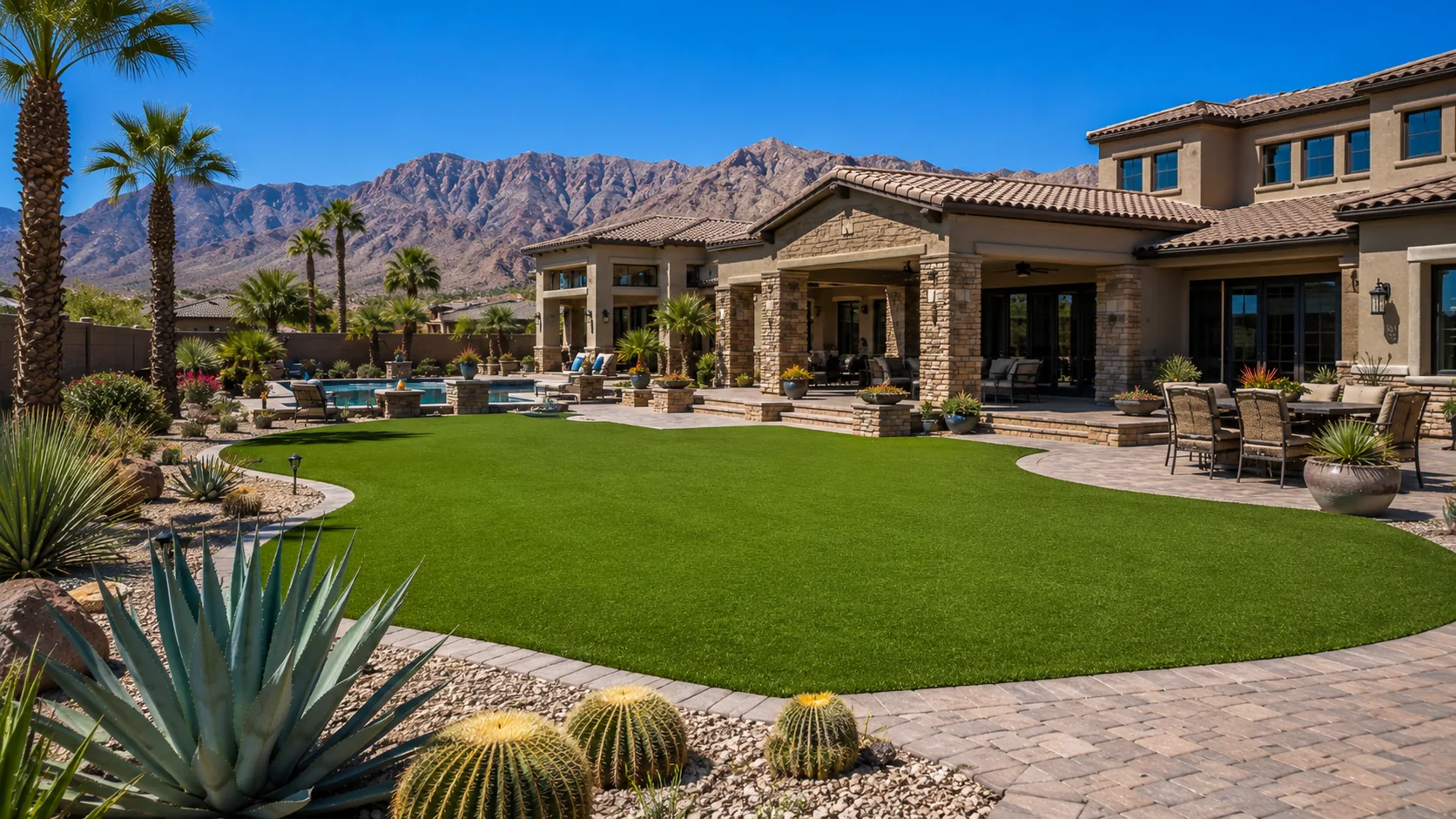
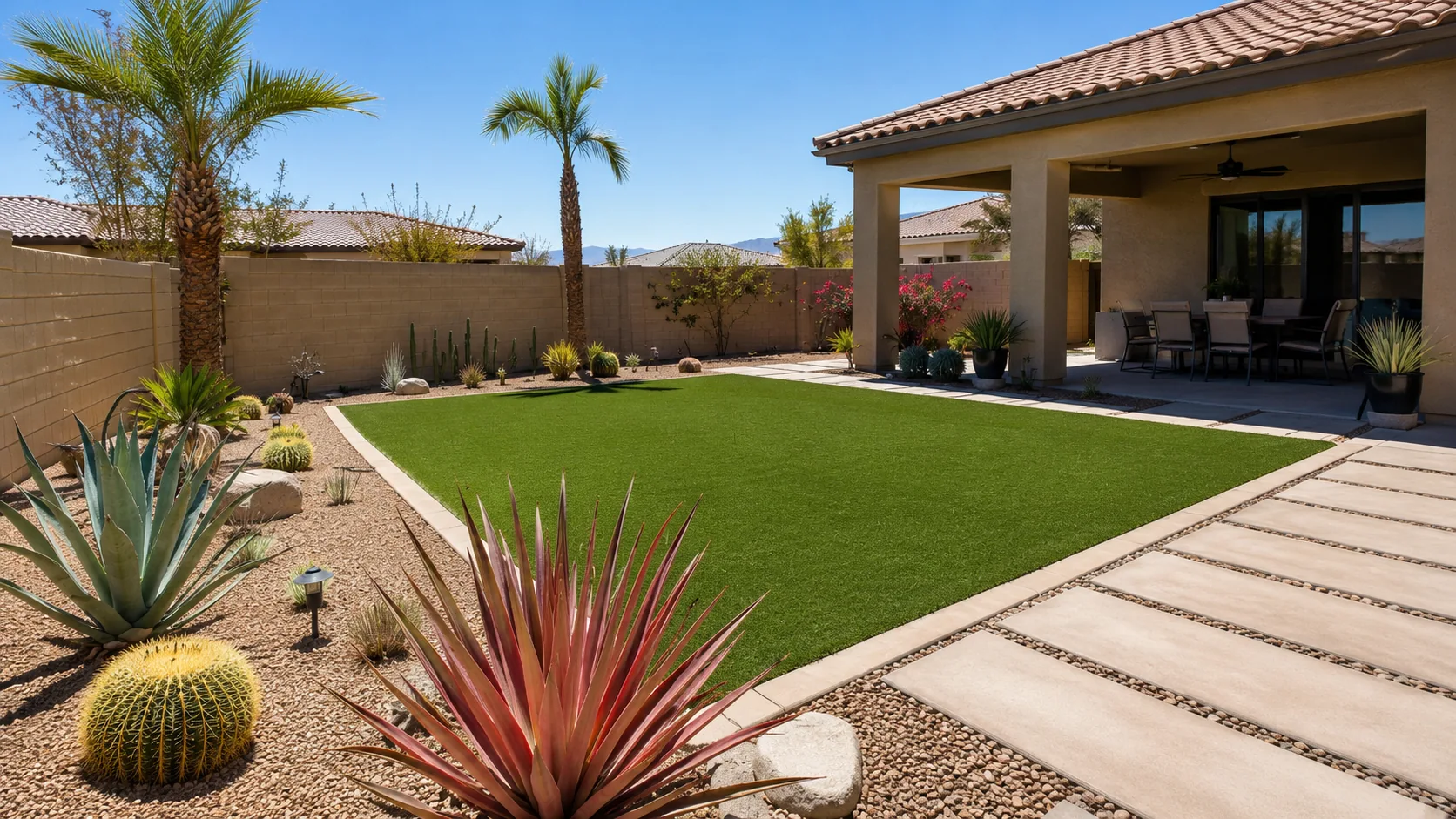
Almost every good Scottsdale yard uses at least two of these. Turf where you want a usable soft surface and green presentation. Rock and desert planting across the majority of the area. Natural grass, if any, only where it is genuinely functional and you have accepted the water cost.
That combination is also what the rebate programme has historically rewarded, since above 1,000 square feet of conversion it required living plant coverage alongside the surface treatment.
Outdoor irrigation is the largest share of most Valley water bills, and most of Arizona's water is used outdoors. The state has been operating under Colorado River shortage conditions with reduced allocations. This is not an abstract environmental argument here — it is why the rebate programmes exist, why the legislature protected artificial turf from HOA bans, and why water rates keep moving.
Turf advantages: eliminates irrigation, which in this basin is the environmental issue that dominates all others. No fertiliser or pesticide runoff. No mower emissions.
Turf disadvantages: petroleum product, no carbon sequestration, no habitat value, finite life with imperfect disposal.
In a water-stressed desert the water argument carries more weight than it would almost anywhere else. But rock and native planting beats turf on most environmental measures except usability, and it is cheaper. If environmental impact is your priority and you do not need a soft surface, that is the honest answer.
Most estimates are scheduled within 48 hours.
Tell us the space and we’ll give you a firm, written price. No pressure, no obligation.